Health Resiliency Institute

A life-altering diagnosis brings profound challenges. By elevating your skills to meet them, you can learn to process difficult emotions and decisions, communicate more openly, and stay deeply connected to what matters most.
The Health Resiliency Institute trains healthcare professionals to use evidence-based Dialectical Behavior Therapy (DBT) skills to help patients and caregivers cope with challenges like these. The Institute's training curriculum is based on the book Coping With Cancer, co-authored by DBT founder Marsha Linehan and cancer survivor and psychoanalyst Elizabeth Stuntz, and was written by Stuntz and DBT trainer Ronda Reitz.
Why DBT Works
Two Truths at the Same Time
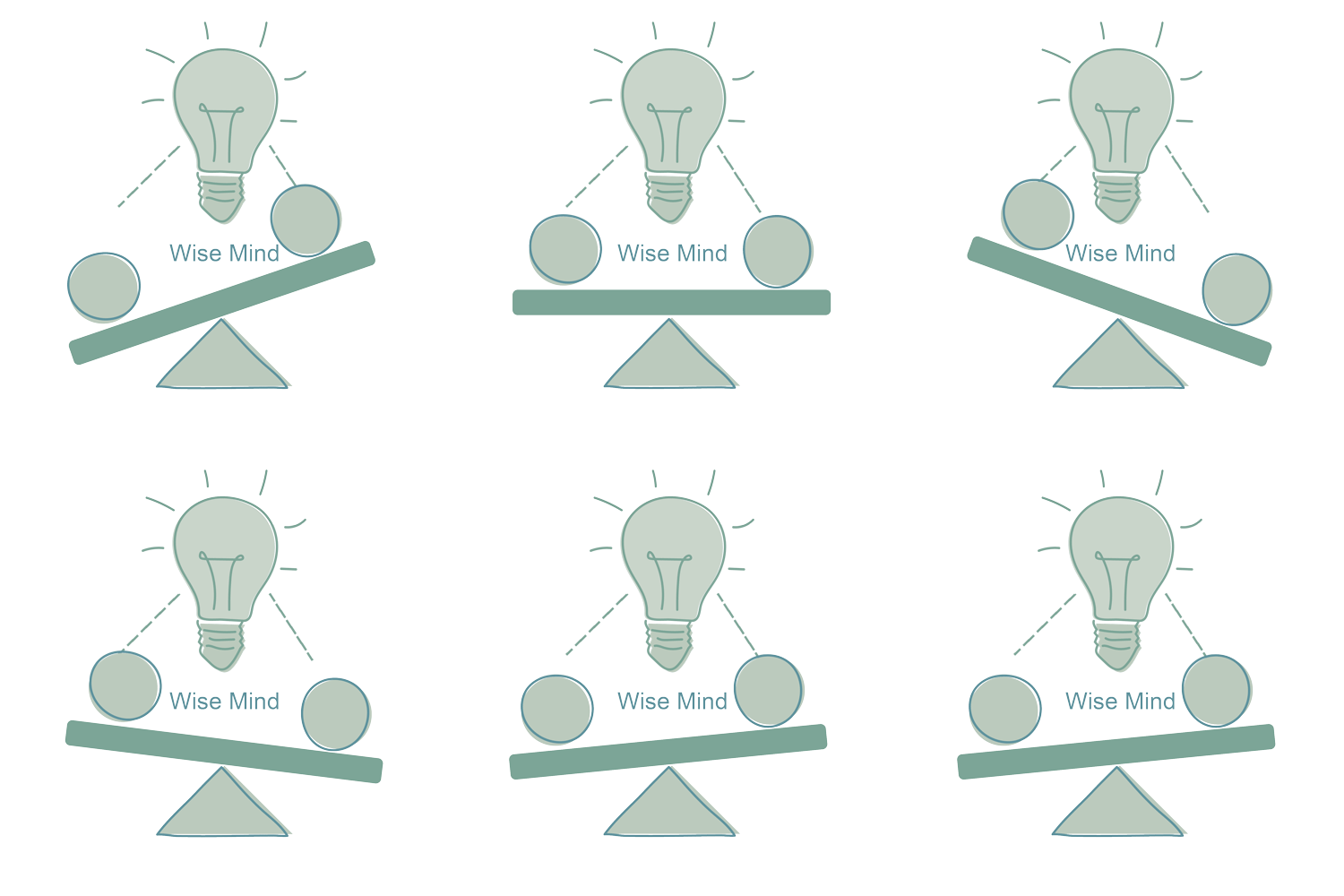
Dialectics is the art of holding two seeming opposites. For someone living with illness, that means:
Being emotional AND thinking logically
Being frightened AND hopeful
Feeling helpless AND choosing to act
That balance gives people permission to grieve a diagnosis and still find moments of happiness. It opens a path to Wise Mind — the balanced understanding that comes from integrating both emotion and logic, honoring what you feel while opening space to consider what you know.
The Training
Built for this kind of challenge
The curriculum gives healthcare professionals concrete skills to address four of the most common challenges cancer patients and caregivers face.
1 Making complicated decisions under stress
Tools for clear thinking when facing high-stakes medical and personal choices — even when overwhelmed by fear or uncertainty.
2 Constructively managing powerful emotions
DBT skills to work with grief, fear, and anger — honoring their message without becoming overwhelmed or controlled by them.
3 Effectively navigating relationships
Communication skills for family, friends, colleagues, and health care professionals — protecting bonds while advocating for yourself.
4 Finding meaning and purpose while living with illness
Reconnect with evolving sources of meaning — the values, relationships, and activities that make life feel worthwhile.