The Health Resiliency Institute

Supporting people touched by illness

Helping people develop skills and nurture the inner wisdom needed to remain guided by what matters most, even in the face of health challenges.

This non-profit expands access to affordable training in practical skills that support patients, caregivers, and professionals through cancer and other health challenges.

Our Work

This training program, designed by Ronda Reitz and Elizabeth Cohn Stuntz, builds on Stuntz’s book Coping With Cancer (co-authored with DBT founder Marsha Linehan). Drawing on DBT, Zen, neuroscience, psychoanalysis, and lived experience of illness, it shares skills to: 

  • Make complicated decisions under stress

  • Constructively manage powerful emotions without becoming overwhelmed

  • Effectively navigate relationships with family, friends, colleagues and health care professionals

  • Find meaning and purpose while living with illness

It is offered in cancer support and treatment settings nationwide.  

Facing Life’s Challenges with DBT (Dialectical Behavior Therapy)

Developed by Marsha Linehan, Dialectical Behavior Therapy (DBT) includes a set of coping skills proven to help people in stressful situations become more resilient and create a meaningful life.

The “D” in DBT—dialectics—reminds us that two seemingly opposite truths can both be true.  Life, feelings and actions are rarely “either /or.” It’s possible to:

  • Be frightened AND hopeful

  • Be emotional AND logical 

  • Feel helpless/vulnerable AND act strong

We like to say, “You can’t change the cards you’re dealt, but you can choose how to play the hand.” 

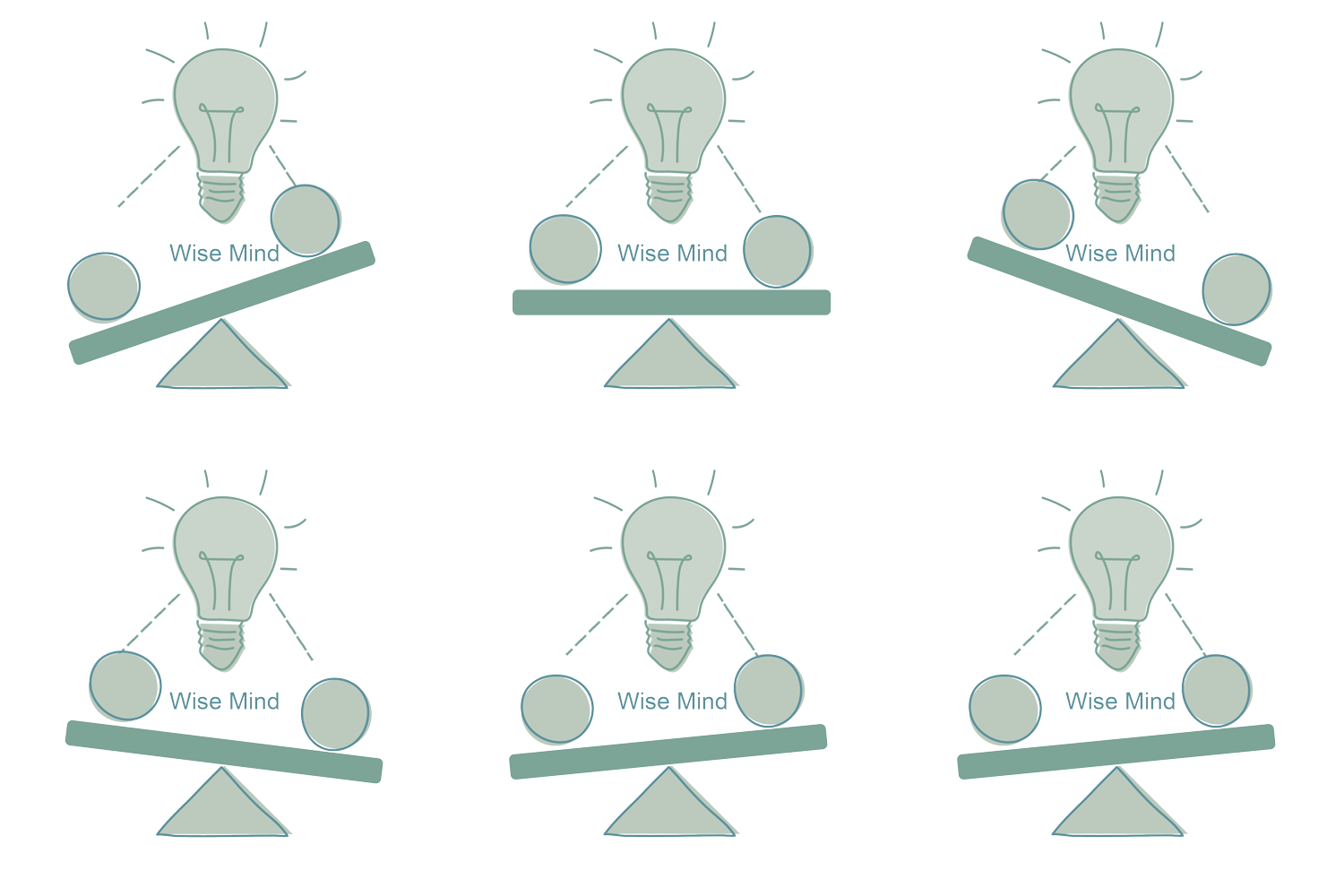
This ability to hold both sides at once helps us find Wise Mind—the balanced understanding that comes from integrating both emotion and logic. Wise Mind honors our first reactions while also opening space to consider other perspectives. By practicing the skills that help us tap into this innate intuition, we can move closer to what matters most to us.

Illustration of a seesaw with two circles, a light bulb above, and the words 'Wise Mind' underneath, symbolizing balance and wisdom.

Guided by Research, Informed by Community

Our work is grounded in decades of DBT research and shaped through collaboration with patients, clinicians, psychoanalysts, spiritual leaders, and communities who share their lived experience and feedback. This ensures our training remains relevant to the real challenges of illness. Early academic research partnerships show promising outcomes: participants find the training understandable and helpful and report greater hope, improved emotion management, and stronger communication skills.

About Us

Alongside our community partners, Elizabeth Cohn Stuntz and Ronda Reitz are committed to making DBT skills accessible and relevant for people touched by cancer and other illnesses. We bring decades of experience in psychotherapy, research, and teaching.

Frequently Asked Questions

  • Dialectical Behavior Therapy (DBT), developed by Marsha Linehan, was built to help people cope with overwhelming experiences they didn't choose and have to live with nonetheless. Living with cancer so often feels that way. A life-altering diagnosis arrives without warning, bringing difficult decisions, hard conversations, and the challenge of living as meaningfully as possible while feeling flooded by strong emotions. DBT skills help people manage those emotions, communicate more effectively, and stay grounded in what matters most. There is evidence to support using these skills across serious illness populations. Studies have shown reductions in depression in breast cancer patients, decreased death anxiety in people living with HIV, and strengthened resilience and psychological flexibility in adolescents facing leukemia. This curriculum, adapted specifically for cancer patients, enhances psychological flexibility, meaning-centered coping, and self-advocacy, while reducing difficulties in emotion regulation.

  • This curriculum is built around three essential building blocks of DBT.

    Mindfulness — paying attention to the present moment without judgment — helps patients reduce anxiety, minimize rumination, improve sleep, and stay connected to moments of meaning and joy rather than being pulled into regret about the past or dread about the future.

    Validation — recognizing that an experience is real and understandable — helps patients quiet their inner critic, trust their own responses, and communicate in ways that make others more likely to truly listen.

    Dialectical thinking — the idea that two seemingly contradictory things can both be true — gives people permission to feel frightened and hopeful, to grieve their diagnosis and still find happiness elsewhere. It also supports self-compassion: I'm coping the best I can right now — and I can learn new ways to cope.

  • No. This curriculum focuses on a targeted subset of DBT skills relevant to anxiety, grief, communication challenges, and emotional overwhelm. The skills are practical and modular, designed to fit naturally within many clinical frameworks (CBT, psychodynamic therapy, social work, oncology nursing, and more), and can be integrated into individual sessions, group work, or family conversations. 

    To be clear, this is not comprehensive DBT. Patients presenting with suicidal ideation, self-harm, or other high-risk behaviors should be referred for full DBT assessment and treatment.

  • When facing cancer, patients are often asked to make high-stakes decisions while flooded by fear, uncertainty, and grief. Stress narrows thinking, intensifies emotion, and pulls people toward autopilot rather than more fully considered choices.

    The STOP skill (Stop, Take a step back, Observe, Proceed) interrupts that response, creating space to more fully observe what's actually happening. Patients check the facts, release assumptions, and consider what else is important— relationships, values, quality of life. STOP helps people access their wise mind, an intuitive sense of what is true and right for them. From that place, decisions are more likely to reflect what matters most.

  • DBT reframes emotions as signals, not problems. Fear, grief, and anger are natural responses to an uncontrollable situation, carrying important information about what matters. Patients learn to observe their feelings rather than push them away, since avoidance tends to intensify them. Instead of turning away from the emotion, the goal is to honor its message and use it wisely and skillfully to decide how to respond.

  • Stressful situations make it easy to say what feels urgent in the moment rather than what will actually serve a relationship or a goal. DBT's interpersonal effectiveness skills help patients manage difficult conversations. The first step is to clarify their priority — what outcome matters most, how important the relationship is, and how they want to feel about themselves afterward. From there, the skills offer practical guidelines on how to express what matters most, clearly and directly, in ways that protect both the message and the relationship.

  • Cancer sometimes shifts priorities and prompts people to re-evaluate their sources of comfort and faith. In challenging times, it's understandable to focus on the darkness and question if meaningful living is even possible. Research shows that directing energy toward what matters most helps patients feel less hopeless while sustaining a sense of purpose and hope.

    This curriculum uses radical acceptance to help people face their full experience honestly, holding grief and difficulty alongside what is still nourishing and meaningful. It guides people to reconnect with evolving sources of meaning — the values, relationships, and activities that make life feel worthwhile.  

  • Yes. You can sign up at the top of this page. A five-week professional training parallels the patient curriculum, where clinicians learn the skills not just intellectually but through direct personal practice. That firsthand experience deepens understanding of what patients are going through and enables more authentic teaching. The training places particular emphasis on validation, one of the most powerful tools for building therapeutic trust, and takes clinician wellbeing as seriously as patient care. The skills help clinicians stay grounded when sitting with intense emotions rather than becoming overwhelmed or pulling away. Remaining connected to what gives their work — and their lives — meaning is itself one of the most important protections against burnout.